
During the talks, the two sides appreciated the deepening of the defence ties as a key pillar of the strategic partnership and welcomed the creation of a Ministerial Committee on Defence Cooperation under the Strategic Partnership Council.
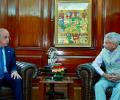
India briefed envoys of around 45 nations on the Pahalgam terror attack and its link to cross-border terrorism. The envoys were briefed in two batches by senior officials of the Ministry of External Affairs (MEA). India also announced punitive measures against Pakistan, including expulsion of Pakistani military attaches, suspension of the Indus Water Treaty of 1960 and immediate shutting down of the Attari land-transit post. Pakistan responded by shutting its airspace to all Indian airlines and suspending trade with New Delhi.
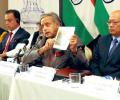
Tharoor, who is leading the all-party delegation to the Americas during his Bogota visit, had expressed dismay over the South American country's stance during a press conference on Thursday.
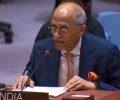
India strongly rejected Pakistan's 'unwarranted aspersions' over United Nations processes and attempts to deflect attention from atrocities committed against children in the country and rampant cross-border terrorism, asserting that the world has not forgotten the Pahalgam attacks.
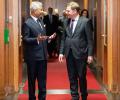
External Affairs Minister S Jaishankar has asserted that India has zero tolerance for terrorism and will never give in to nuclear blackmail, emphasizing that New Delhi will deal with Pakistan purely bilaterally. He made these remarks during a joint press conference with his German counterpart in Berlin, where he also highlighted the importance of the strategic partnership between India and Germany, emphasizing the need for a free trade agreement between the two nations.

Under the defence partnership, India and the UAE are eyeing defence industrial collaboration and cooperation in advanced technologies, cyberspace training, special operations, interoperability of their militaries and counter terrorism.

Pakistan's Information Minister claims nearly 800 Afghan Taliban terrorists have been killed in Operation Ghazab lil-Haq, launched in response to cross-border firing.

India has secured international support in its fight against terrorism, with Russia, Japan, and the United Arab Emirates expressing solidarity and a commitment to working together to combat the threat. This follows a recent terrorist attack in Pahalgam, India, which claimed 26 lives. Multi-party parliamentary delegations from India briefed the leaderships of these countries on Operation Sindoor, India's response to the attack, and discussed ways to enhance cooperation in counter-terrorism and combating radicalism. These developments highlight the growing global consensus against terrorism and the importance of international collaboration to address this shared challenge.

External Affairs Minister S Jaishankar clarified that there was no third-party intervention in the ceasefire with Pakistan during Operation Sindoor. He asserted that halting the operation was not linked to trade and refuted claims of mediation by US President Donald Trump.

The Indian government outlines its futuristic defence programme, Sudarshan Chakra Mission, focusing on indigenous development, predictive technologies, and targeted counter-action systems to enhance national security.
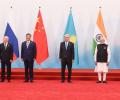
The Shanghai Cooperation Organisation (SCO) strongly condemned the Pahalgam terror attack and concurred with India's position that 'double standards' in the fight against terrorism are unacceptable.

By appearing to privilege ideological affinity over strategic balance, India risks eroding the trust painstakingly built across West Asia. Once the perception takes hold that India's friendship is conditional and transactional, rebuilding credibility will be difficult, warns Amberish K Diwanji.

A Delhi court has granted the National Investigation Agency (NIA) custody of two men accused of murdering Bangladeshi political activist Osman Hadi, whose death sparked widespread unrest in Bangladesh. The suspects, arrested in West Bengal, are believed to have fled Bangladesh after committing the crime.

Pakistan and the Afghan Taliban have resumed peace talks in Istanbul, aiming to address cross-border terrorism and prevent further escalation. The talks follow recent clashes and a temporary ceasefire, with Pakistan demanding that Afghan soil not be used for terrorism.

A flight carrying an Indian MP delegation to Moscow, led by DMK leader Kanimozhi, had to circle in the sky for a period of time due to a drone attack, but the aircraft later landed safely. The delegation, deputed by the Centre as part of an international outreach post Operation Sindoor, landed in Moscow on Thursday night on the first leg of a five-nation tour to sensitise the international community on Pakistan-sponsored cross border terrorism.
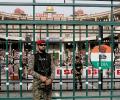
India registered its protest at the board of IMF, which met on Friday to review the EFF lending programme for Pakistan.
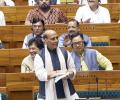
Here's a quick look at who spoke in the Lok Sabha on the first day of the Operation Sindoor debate.

Pakistan added that it is necessary to establish "veracity of the Indian claim".
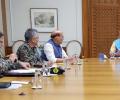
India has called Pakistan's nuclear bluff with Operation Sindoor and sent a psychological message to state-sponsored terrorists: nobody is untouchable and no place in Pakistan is safe for you, government sources said on Sunday.

On Tuesday, April 22, terrorists attacked tourists at the Baisaran meadow in Pahalgam, killing 25 Indian nationals and one Nepali citizen, and leaving several others injured.

New Delhi said if the reports of Azhar's location are correct, then Pakistan's "duplicity" has been exposed as it has been maintaining that the JeM chief is not in that country.

In his address, Jaishankar warned that those who condone nations that sponsor terror will find that it "comes back to bite them".
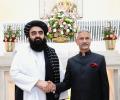
India has upgraded its technical mission in Kabul to an embassy, with External Affairs Minister S Jaishankar acknowledging the Taliban's consideration of India's security concerns. The announcement was made during talks with Afghan Foreign Minister Amir Khan Muttaqi, marking a significant step in advancing ties between the two nations.
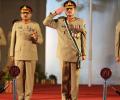
India has issued a strong warning to Pakistan against continuing its 'hateful' rhetoric and any potential misadventures, following recent nuclear threats and remarks from Pakistani leadership.

A new US intelligence report warns that India and Pakistan's relations remain at risk for nuclear conflict, fueled by terrorism and escalating tensions in the region.

Shehbaz emphasised that water was a lifeline for Pakistan, and no compromise would be made on the country's rights under international agreements, as per Geo News.

India said on Thursday that it desired normal relations with all its neighbours, including Pakistan, and advised Islamabad to create a conducive atmosphere, including by taking "credible, verifiable and irreversible actions" to stop cross border terrorism against it and enable the two countries to engage and address issues bilaterally.

Afghan Foreign Minister Amir Khan Muttaqi expressed confidence in stronger India-Afghanistan ties following a visit to Darul Uloom Deoband, thanking the people for their warm welcome and indicating plans to send new diplomats to India.
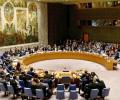
Pakistan and China have submitted a joint bid at the UN Security Council to designate the Balochistan Liberation Army (BLA) and its suicide wing - Majeed Brigade - as a terrorist entity under the Council's 1267 Al Qaeda Sanctions Committee.
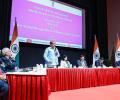
JD-U MP Sanjay Kumar Jha heads a diplomatic mission to Indonesia, Malaysia, South Korea, Japan and Singapore, to seek international cooperation after the Pahalgam attack while highlighting Pakistan's role in cross-border terrorism.

Pakistan has announced a temporary pause in its ongoing operation against the Afghan Taliban in response to requests from Islamic countries and in view of the upcoming Eid festival, following accusations from Afghanistan regarding an attack on a rehabilitation hospital in Kabul.

India and Pakistan exchanged lists of their nuclear installations on Wednesday, fulfilling a decades-old agreement that prohibits attacks on each other's atomic facilities. The exchange took place amid strained relations between the two countries over the Kashmir issue and cross-border terrorism. The agreement, signed in 1988, mandates the annual exchange of such lists, which has occurred for the 34th consecutive year.
India told the UN Security Council that it calls for a pragmatic engagement with the Taliban, underlining that a focus on only punitive measures will ensure a 'business as usual' approach.

A Pakistan that is more secure in its relations with the US is also one that might well wish to indulge in another cross-border misadventure.
An Indian delegation led by the BJP's Ravi Shankar Prasad will tour key European capitals to expose Pakistan's role in cross-border terrorism and State-sponsored extremism.

Describing the visit as "productive" in a post on X, the PM said he emphasised India's position on key global issues during his engagements.

Top military officials from India and Pakistan highlighted their views at the Shangri-La Dialogue in Singapore, billed as Asia's premier defence forum, amid heightened tensions between the two sides following last month's military confrontation.

India's Permanent Representative to the UN, Ambassador Parvathaneni Harish, delivered a sharp response to comments made by Pakistan's Ambassador to the UN, Asim Iftikhar Ahmad.

India has suspended the Indus Waters Treaty with Pakistan, citing sustained cross-border terrorism and security concerns. The treaty, brokered by the World Bank in 1960, governs the distribution and use of the Indus river and its tributaries between the two countries. India's decision follows a recent terror attack in Jammu and Kashmir, and has been met with strong condemnation from Pakistan.

The ministry of external affairs also seemed to reject Trump's forceful comments that Washington brokered the understanding between India and Pakistan on ending their four-day military conflict.
